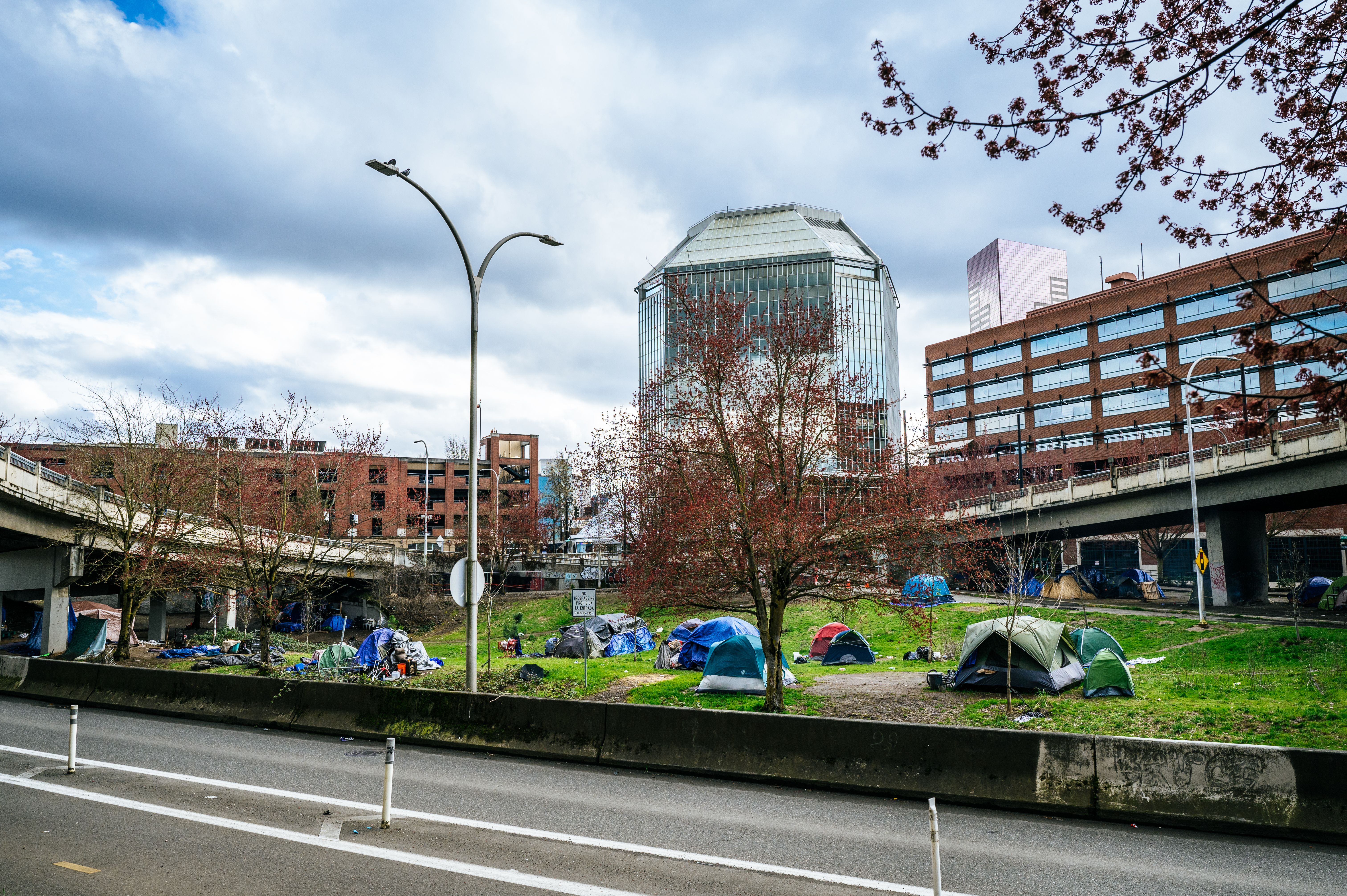
The state of Oklahoma wants Tulsa to pay $523,873.90 for clearing homeless encampments on state-owned land, setting up a fiscal standoff between Gov. Kevin Stitt's administration and Mayor Monroe Nichols over who should foot the bill for Operation SAFE.
State Chief Operating Officer David Ostrowe sent a letter dated Aug. 10 to Tulsa Police Chief Dennis Larsen warning that the state spent the money because Tulsa police failed to take action to enforce the law and address encampments. The letter also threatens legislation in the next session to recover the entire cost of any past, present or future cleanup measures if the city doesn't start enforcing anti-camping laws on state property.
Tulsa has not received a formal invoice. The letter is a warning shot.
Nichols fired back on Aug. 13, rejecting the premise entirely.
"The State made a decision to conduct a large-scale cleanup of property that it owns and maintains," Nichols said in a statement, according to Public Radio Tulsa. "It is difficult to understand how the City of Tulsa then becomes financially responsible for that cleanup simply because the State wants to be reimbursed for their own expenses."
Nichols said Tulsa has spent significant time and resources responding to consequences of the state's sweeps, including helping displaced residents recover lost medications and identification documents.
The mayor pointed to the city's own homelessness program, Safe Move Tulsa, which he said has moved nearly 600 people out of homelessness, closed 10 encampments, provided housing services for 40 animals and cleared nearly 190 tons of trash in less than a year. That program launched in fall 2025 with $6 million in city funds and has since grown to $11 million with contributions from the Tulsa Leadership Council and the Anne and Henry Zarrow Foundation, according to a June city council update. Tulsa's FY27 budget includes $23.5 million for a multi-year homelessness response.
In his letter, Ostrowe wrote that state government is not Tulsa's cleanup crew and that state taxpayers should not be required to subsidize what he called a municipal policy of non-enforcement. He warned that each time the city refuses to act, the financial burden shifts from Tulsa to taxpayers across all 77 counties.
Tevis Hillis, a spokesperson for Stitt's office, said in a statement on Aug. 13 that the state has shielded Tulsa from the costs of providing mental health and social services to those who accepted help, the Tulsa Flyer reported. "The least the municipality can do is keep the streets clean and safe," Hillis said.
Operation SAFE launched in Tulsa in mid-September 2025. Under the program, state troopers clear encampments on state land, requiring everyone to leave and discarding remaining possessions. Neither Tulsa nor Oklahoma City asked for the operation. State-led sweeps in Tulsa led to no arrests and only one connection to services, according to Public Radio Tulsa.
Oklahoma City received a parallel letter citing $375,701.21 in state spending there. The state agreed to pay up to $800,000 for housing and services for people displaced by Operation SAFE in Oklahoma City through a deal with the city-run Key to Home partnership, according to The Frontier. No similar offer has been extended to Tulsa.
The Governor's Office did not respond to questions about the proposed cost-recovery legislation, its mechanics or which lawmaker would sponsor it. The next regular Oklahoma legislative session begins in February 2027. Residents who want to weigh in can contact the mayor's office or their Tulsa City Council representative.