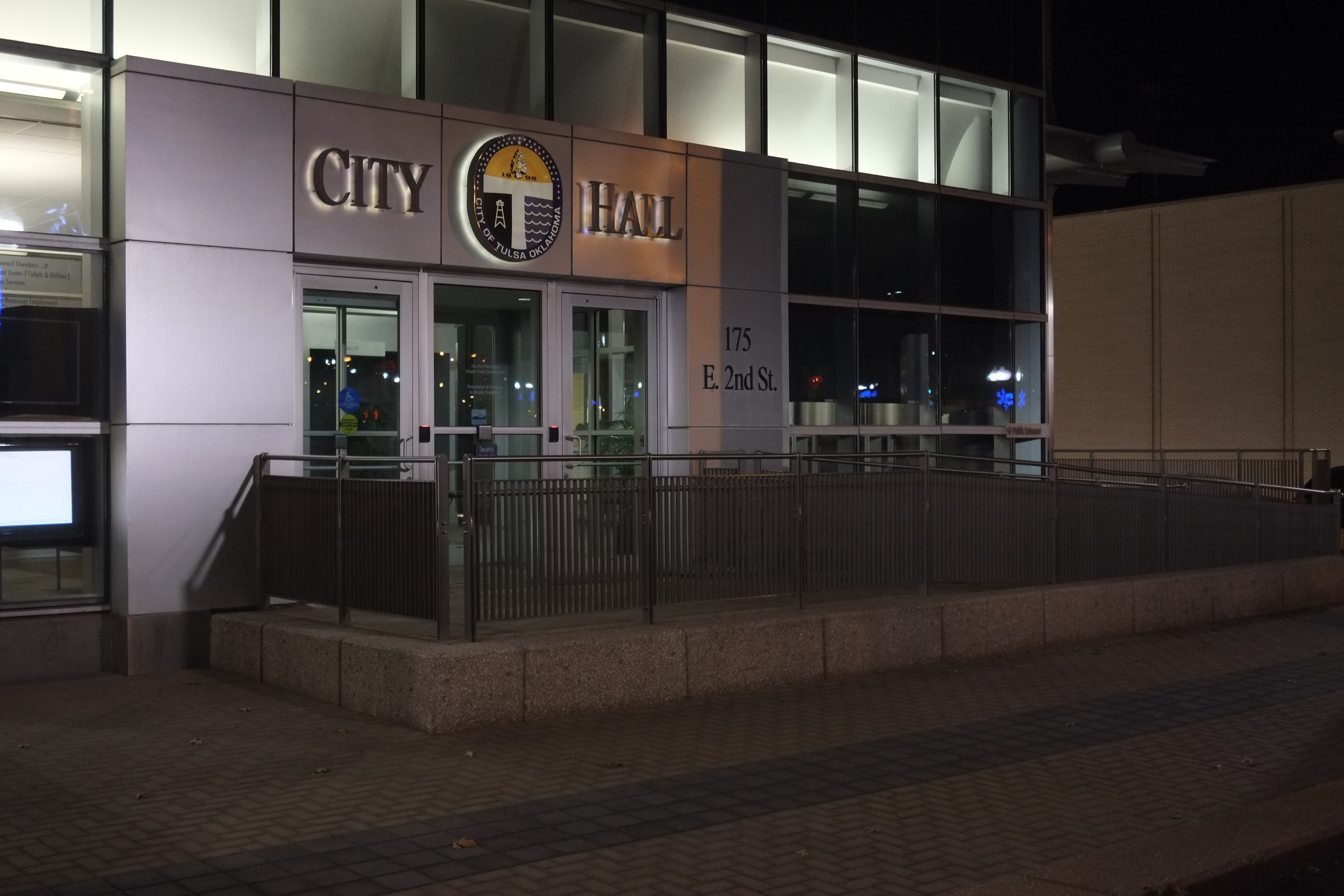
The Tulsa City Council will vote Sept. 16 on a proposal to provide city-backed lawyers for low-income renters and landlords facing eviction.
District 4 Councilor Laura Bellis authored the resolution, which would declare the city's intent to fund an eviction prevention and legal representation program. It does not carry the force of law or commit a specific dollar amount. Instead, it would direct a department chosen by Mayor Monroe Nichols to pursue a public-private partnership pooling philanthropic, corporate and government money.
Bellis floated a "ballpark" $500,000 city investment over multiple years as seed funding during an Aug. 26 Public Works Committee meeting, the Tulsa Flyer reported. She called the figure an upper bound and estimated legal support costs about $500 per person served, according to KTUL.
"There are 13,000 evictions a year in Tulsa. About 3,500 of them have tenants with representation," Bellis said at a council meeting. "What if a few more had representation?"
The resolution cites roughly 14,000 eviction actions filed annually in Tulsa County. Bellis's 13,000 figure refers to evictions within the city.
The program would serve Tulsa residents with household incomes at or below 200% of the federal poverty level. Households with school-aged children or members of vulnerable populations would get priority.
It would also cover low-income landlords pursuing evictions. Bellis said the largest eviction filers in Tulsa tend to be out-of-state corporate landlords, while smaller property owners often cannot afford legal help on their own.
Funds would flow through a competitive process to nonprofit legal organizations and licensed attorneys. Katie Dilks, executive director of the Oklahoma Access to Justice Foundation, said at the Aug. 26 committee meeting that Legal Aid Services of Oklahoma would likely take on some of the work and that the program could bring additional providers to the table.
Bellis said private funders will not invest until the city shows "skin in the game," but she believes the city could eventually step back as outside partners scale up.
The resolution was on the Thursday, Sept. 3, council agenda but was pulled shortly after the meeting began. Bellis said a colleague asked her to add language prioritizing mediation and out-of-court dispute resolution.
Several council members signaled support at the Aug. 26 committee meeting. District 7 Councilor Lori Decter Wright, who chairs the Public Works Committee, said funding earmarked for eviction mitigation in the city's 3H Task Force could be tapped for the program. The task force focuses on housing, homelessness and mental health. District 6 Councilor Christian Bengel said he hopes landlords are included. District 8 Councilor Phil Lakin Jr. asked, "Who or what is not going to like this?"
Bellis also cited a 2024 ImpactTulsa report linking eviction filings to increased chronic absenteeism among children, an effect she said can follow a child for up to a year.
Any city funding would still require approval through the regular budget process. Residents can follow the council document online.